The most powerful method of learning is to go from theory. It puts thing in a powerful order and allows to predict all ways of creativity. But no one will learn anything unless they dive in the never ending world of experience, feelings, intuition, and emotions with success and mistakes. Learning is a transition from theory into practice. Sometimes, it is learning theory first, then practicing the subject until it becomes a second nature. Or it is discovering the theory from the practical experience, and then, rethinking, redoing, reshaping the practice. Analysis and synthesis and again.
2011 November 21
On Sunday I had an honor to watch EDUARDO SAUCEDO & Marisa QUIROGA performance at Alberto's. This couple has presented a wonderful tango ! Very complex, interesting, inventive. inspiring, energetic, captivative. With all my expertise I vote for them ! They were very warmly accepted by the audience. With their mastery they visually presented the way how tango should feel inside.
2011 November 13
Computer Literacy Bookstore is alive !!! I am returning back to software from these crazy 10 years of tango. Suddenly I have remembered that there was a wonderful Computer Literacy book store in Sunnyvale, just 5 minutes from my first software job at Computer Curriculum Corporation. So, I searched the internet and found to my greatest grief that this store was bought through some sort of schema by Barnes and Noble and closed, as they explained it, "to cut costs", in 2001 ! 10 years ago !
Big smiling guy from this site was happy to announce to the whole world "RIP Computer Literacy Bookstore !" "Go to Barnes and Noble" - that is what he meant. Ok, thought I, let us look for it. I even printed B&N maps of the area... But wait a minute... I remember some time ago, about 8 years, I was passing the Lawrence Expressway, and I saw a book store, and I stepped in there, and I did buy some books.
So I searched for "Computer Bookstore Sunnyvale (Bay Area)", and I have found that indeed it is there ! It is called DigitalGuru, but I do not care ! Tomorrow I am going there. I am happy such store still exists !
... Next day I went to this store. Nice store with a lot of technical book I haven't seen in other places. There was a lot of books with price reduction. But they did not have a book about Direct Show I was looking for ( it is a rare book ), but they did have a book about Direct3D, which is close. I decided to check Barnes and Noble. I did. They had nothing of a kind. ( Actually their mathematical section is significantly smaller then at the recently collapsed Borders). So, then, I went to Amazon. They had two which I immediately ordered. There were quite expensive. So, the score is B&N vs "DigitalGuru" vs Amazon - 0:1:2. Amazon was more expensive.
... That is a story. The story started 10 years ago, and still continuing for a little guy like me. Here is a google link to the "only surviving technical bookstore in Bay Area"
2011 August 29
Anton Gazenbeek launched his new website. Anton is an author of several tango-reseach DVDs and an exceptional book "Tango Argentino" which I highly recommend. Written in wonderful language and meticulously detailed, this book covers the most important event in tango history: creation and life of the "Tango Argentino" show premiered in Paris which gave birth to Tango renaissance in the world. This book is one of the best books about tango ever written.
2011 July 23
Stumbled upon 3 stars singing the same song "Love Me Or Leave Me":
( I just can not miss to share with you my adoration with her artistic talent: My Heart Belongs to Daddy
(continuing with this... how much we missed back in the first life: Marilyn Monroe. ))
2011 July 23
To those who write about Piazzolla.
It is wonderfully written, but what do you think, what would other musicians do when they would want to play tango after reading this article? And articles written by many others? They will go and try playing Piazzolla, who else? Of course, ...your goal is to write about great musician Astor, but he is way beyond tango - he is, arguably, the greatest classical composer of 20 century. At least he is among the most played now. You create, as many other writers, an atmosphere where Piazzolla comes to the front plan in Tango. While he is not there. Would it be better to write more about D'Arienzo, Di Sarli? True cornerstones of Tango? Whose music is played at Milongas around the world while very few DJs play Piazzolla. I can and I love dancing to Piazzolla, but I prefer that musicians coming to tango learned first Canaro, Firpo, D'Arienzo, Di Sarli, Agostino, Tanturi. Their music is very complex. It is comparable to genius of Piazzolla in many ways. Tango would be impossible without them. But without Piazzolla? May be.
2011 July 20
A friend of mine, currently from Buenos Aires, wrote:
"It´s a slow Wednesday night at El Beso. As I scan the room with my gaze during the cortinas, my eyes keep wandering hopefully over to the bar area where someone with whom I almost always dance a couple of tandas is standing. He looks hopefully out at the rows of women, but when we make eye contact his eyes turn blank and fuzzy. Across the room, another regular partner of mine does the same — his eyes blinking and unfocused for a second and then sweeping quickly out of reach of mine. This evening, I am not feeling the love and I´m musing on the topic of rejections..." [and so on]
Oho, blinking eyes…. Frankly, Terpsichora, it is a sign that you should take many more classes. Very simple.
2011 July 20
It seems to me there are several kinds of "cabaceo". 1. when you do not know anyone. 2. You have some friends, usual partners around the milonga. 3. You know everyone there, and you know exactly how you want to dance this evening, there is a priority list in your mind. It is multiplied by a) You can not really dance yet; b) you are a solid dancer, but there are many people who would not consider dancing with you their first priority; c) You know you are a master at this club, even if some people do not know you. You can dance confidently with everyone and you can be among the very best and most desired. It is an honor and an event dancing with you, and you know it.
So, there are 9 kinds of cabaceo situations.
2011 July 18
At the Studio Gracia at 00:35 I observed the following: all dancers, 11 experienced leaders danced 11 beginner ladies. Similar picture I have observed last Thursday at Stanford Tango Club, and last Wednesday at the new Marcelo's practica "Florida", as well as in all other clubs recently.
No experienced women dancers are observed on the floor ! Only men who somehow mastered the art of navigating the floor and moving their partner around. If an experience woman is there, she dances practically exclusively with her trusted partner.
What is going on !?
Besides of the obvious reason that some women progress faster, and they found, at a certain stage, that, well, in their own words "There is no one to dance with", there is another reason. More experienced leaders clearly prefer to dance with promising beginners than with women who do not progress and do not go to classes. Often beginners in their virginity are much more interesting to dance than "under-studied", and it means "spoiled" ladies. Of course, that effectively spoils those beginners who all think that if men dance with them, they do not have to come to classes. And that is going on in a circle. Women just are kicked out of Tango by these two reasons which can be summarized: "Poor leaders spoil and then scare women away".
We all have to take classes from the teachers who REALLY KNOW HOW TO DANCE TANGO !
I have noticed it and I am struggling with it as much as I can: there is a "dark zone" in woman's tango development. In this zone she is actually worse, much worse tango dancer than at the time she was a beginner. She has to pass this zone to obtain that spontaneity, elasticity, natural following, surprise, creativity which beginner often possess, but the first years of classes and local "dance-floor-teachers" effectively kick out. It makes it much more difficult, that she usually thinks about herself being at this zone that she is not there.. that she "knows how to dance tango". Being at this zone, women usually drop attending classes, and that is the beginning of their tango end.
2011 July 7
Do you follow me? It is strange, it is very strange,
But such a finalized and eccentric crank I am.
I am chasing mists, I am going after fogs
and I can not cope with myself.
People are exiled by business, people are after money,
Running away from insults, anguish and distress,
But I am going after dreams, after mists,
and smell of taiga.
Do you follow me? It is simple, it is very simple,
For those who departed once.
Imagine, this is sharp, very sharp:
Mountains, sun, firs, songs, and rains.
Let my bags be stuffed..
Memories, sorrows, debt duties..
But I am going, I am going for mists,
For dreams, and for smell of taiga.
Yuri Kukin, 1932 - July 7, 2011
( my translation from Russian )
What a coincidence. Yesterday I've uploaded, for the first time my old photos where I probably was singing the song "After mists" since it is my favorite song. And today I have found Yuri Kukin, an author of this song has died.
Here is this song in the performance of a professional singer Makarov from 1960. He looks a little like my father. And Gagarin. All dead long time ago...
One more nostalgia from my childhood: "Penguins" ( all in russian .. ). Times changing. To good ? Here is the modern intertrepation of the popular song form a russian blockbuster of 1960s "Man-amphibian". No doubt, the technology of mass-media production make as big leap ahead as the all other technologies..
The last number of the memorial concert: Carmen McRae "Summertime".
Frankly, I forgot and never even thought about Kukin. Where he is, how he is, dead or alive.. Just sung somtimes my favorte song of his when in sorrow. And now he passed away. The news is not in newspapers, but it already has circulated the globe on the net. He's gone and suddenly we remember him..
I have a collection of links to tango videos I collect since 2005 ( on the site. I collect video records since 2001), it is up there, in the main menu, but I want just to bring back the memories of all wonderful styles of tango, abundance of it. So, here are the best tango vides I've seen so far.
I've updated it today with Carlos Gavito and Marcela Duran milonga video in "Just the best" section. This is the dance I know milonga from. This is the dance I dance and teach.
I know some people might say: "This is show tango, not a real tango".
Other people might say: "This is too posh, too old".
And I do not know what to say.. I'll try.
There are numbers. There are odd number, and there are even numbers. Someone might like odd number, and someone - even. The truth is that to know Mathematics, one has to Know All numbers. They are interconnected. There is something which is irrelevant, for example "I like only numbers written in red ink", or "I like only numbers in modern type, all this gothic is not for me". What this has to do with Mathematics?
Tango has many forms, but essence stays the same. There is essence common to all tango styles.
2011 June 5
On Salida: "Every exit is an entrace somewhere else" (from Internet).
2011 June 4
When you start dancing tango it is like a palace.
Figures are rooms.
You go from one room to another through a door.
A teacher shows you another room and a door.
And there is no end.
A master shows how to pull curtains and a dancer realizes that there are no walls.
2011 June 3
I struggle - she struggles;
I struggle - she adapts;
I adapt - she adapts;
I lead - she follows;
I adapt - she performs;
I lead - she performs, following;
I perform, leading - she performs, following;
2011 June 1
- Carlos Gardel and Mona Maris (thank you, Terence). [Click on the image to see the larger picture.] It is a wondeful tango image, but some people may ask "Are they dancing Ballroom?" I was asking this question myself. Now I know the figure which can result in this pose. I am not sure they dance it, but it will result in the same pose.
Masterful dancer may tell you "How", but masterful teacher must tell you "Why".
2011 May 28
Listen what happened to me on this Friday.
I came to Mountain View to pick up my son Ilya. He usually hangs there at Castro in the evening. He knows there all street musicians, bums, and bartenders. He called me and said that his best friend, a magician, wants to meet me. I stopped by to say hi. Very interesting man. I was talking to him, he have shown me some interesting tricks. Then somehow we started to talk about tango. It turned out he likes big bands of 30-40. I asked him for a list of the most popular ones, since I was looking for it. He compiled a whole list for me, even called one of his friends to clarify the details. Evening was slow.. so he started collect his staff to go home. I said I want to stop by the second-hand bookstore in front of which we were standing. It is my favorite store, I am buying there a lot of books and calendars. He said he wants to go there too.
I want to the store first and you know what, the very first thing which I have noticed there was facing me DVD called "Big Bands Magic", a rare documentary about dancing to big band music in San Francisco in 40s. I bought it.
2011 May 14
"You are my friend, and this is about Tango.."
Abstracting clouds Blocking over the sky are Catching my eye gently. Doves are flying somewhere nearby, Evergreen trees nodding their heads friendly.
Fantasies are swirling in my brain, Going faster and faster. How are you, my dear Dame? Incredible feelings you can always foster!
Jogging, flying, Knocking on your door- the Love letter is falling on your floor. My feelings that I ever pour Nobody will feel their handsome galore!
Oh, dear friend! Present is a gift! Rather what I feel right now! Sorry, for scribbling all of that! Those words are get twisted like a plow.
Upheave the roots so precious for the soul! Void taking mental relaxation! Whatever love is there- it's strong as used to be before!
X-ray your pace and where you want to be in the space! You're the greatest soul and always filled with grace! Zen, zen, zen...
Mila Shvartz
2011 May 11
"Ах танго шаг такой прекрасный!
А поворот крутой и страстный!
Все благодаря учителю!
Моему методичному мучителю!"
Sent from my iPhone
2011 May 9
From a letter to me:
"I happen to go to the Milonga on Saturday. ...
I just want to let you know something that I thought about the performance [Gustavo Naveira and Giselle]. They are really good dancers. I have seen many great dancers perform. As an on looker and a student of dance, It has occurred to me that because the tango world (here in the States), in general does not have the patience to study technique. Also, the students here do not understand that technique is something to work on, study and attempt to master master, hence, they find excellent performers amazing. The next thing they think about is I can get there by learning steps. So the traveling instructors give them both of these.
I just looked at the performance and said nice dancers. I appreciated tango as a medium or material but underneath it all is technique and spirit/passion.
Technique and spirit/passion/music are the most important things in making excellent dancers. Going a little further, if a performer just has technique and no spirit, there is no excitement or no expression. I have seen this in the dance arts. If there is spirit, this can carry you a lot farther than one thinks. I have seen this as well. But if you have technique to back up the expression or spirit, then you have something that is alive. This is what the performers on Saturday night had. I think that the tango community have a sense of fun and some spirit but they lack strong technique and discipline.
It is the constant pursuit of technique and spirit that keeps me interested in dance. The striving for perfection on all levels. I think that is why I prefer classes instead of Milongas. I will love Milongas when I find dancers that understand this. One guy that I danced with on Saturday night told me that he was humbled by watching the performers. He was a fellow student at City College and Nora's student. I loved hearing this. I think that he had a clue.
I will add that to some people technique goes over their heads and out the window. They do not even know that they need technique let alone know how to listen for it when instructed. They do not know that technique is what connects one movement to the next movement. This is a mystery and takes quiet a long time to discover. There is a famous quote from Martha Graham "It takes 10 years to be a dancer." We tell ourselves this all the time in the Modern Dance community and sometimes with humor.
I am 6 years in the tango world. It is taking me a while to sort out where my dance technique that I have fits into tango. Now that I have been dancing with you, it has all come together more and more. I have gotten my body back to a somewhat working dance body. I think that 6 years is a long time. But I am glad that I am out of City College classes and into a more private settings. I think that it would have not taken me so long if I had come to a more private setting to learn Tango. I must add that once a week was not enough to really dance anything on any level well. All there is now is up from here.
You might be interested in this quote from Martha Graham:
"There is vitality, a life force, an energy, a quickening which is translated through you into action. And because there is only one you in al time, this expression is unique and if you block it, it will never exist through any other medium and the world will not have it."
I will add that she was big on technique. She was quite demanding in this area. But she also demanded the spirit to come into action."
NN
2011 May 9
It is important for a woman to understand what whould be done to get her iviting rate higher, but one question can be raised. There are women who do not want to be invited by anyone at a milonga. What they should do? There are many dancers who dropped tango, or dance exclusively with a handful of better leaders. The current level of leaders in SF is horrible ! Any better woman is losing any interest in dancing with them: boring, pushing, not clear, rushing, no musicality, no rhythm, no attention. It is easier to become an average follower. 3 times easier. It is difficult to become an average leader. It is much more difficult to become an advanced follower. It is exceedingly more difficult to find a partner when you are more advanced... The only solution for women, as I can see, is to become fantastic dancers and to compete for a handful of truly dancing leaders. On the other hand, very advanced women do not require advanced leaders. Good leader ( which we do not have much either ) will be satisfactory when a woman knows the dance. Or learn leading themselves... Thinking about community, I would suggest that we all should think more about how to grow better leaders. Then the women's problems will be solved.
2011 May 6
Couple words about Gustavo Naveira & Giselle. Gustavo is a founder of "Tango Nuevo". Tango Nuevo style has a lot of aficionados in San Francisco. Even some famous teachers of these style live locally. How come that Gustavo now is working with Nora who is in no way associated with Tango Nuevo and does not work with those who teach and popularize his style? What is going on?
Just have heard today, who is Gustavo: "A father of Ariadna".
2011 May 1
Nu i pervomaj v etom godu !
- princ zhenilsja;
- vnukov cadafi razbombili;
- beatifikacija Pontifica tozh segodnja;
- i naposledok ( li? ), benju ukukali;
a vot i ot menja podarok: Gloria y Eduardo Arquimbau - Tango-milonga (Canyengue), 2003
2011 April 27
Visualization of music. It is very clear how figures are forms as "chunks of sounds". Up to 4 musical lines to follow! Dancing, we do the same music visualization, don't we? We visualize it to our mutual feelings, and some of it is visible in our movements.
2011 April 26
Winners of "San Francisco Open Championship 2011" which is for some mysterious to me reason is called 1-st (?) Argentine Tango USA Championship.
Indeed, brilliant performances! It is a good start and encouragement. I feel everyone is heat up thoughout the community.
I wonder, why with so many teachers including so many Argentinean teachers in our oldest tango community, and with so many local participants ( almost all ), the winners were outsiders? Do you have any idea?
2011 April 18
I was dancing with one lady recently. We are quite familiar, so I said her ( Which I never do in other circumstances ):
- You are dancing wonderfully, but you are not following.
- Why is our dance is so smooth then?
- Because I am following you.
- ??
Then I told her what she should do to actually start following me. She tried, and our dance immediately jumped to the next level.
- Hm, - she said, - I thought that I was following..
That is the key phrase! Are there other ladies around who think they are following, while they actually are not?
2011 April 17
Art of improvisation? Here is the good example. ( sorry, the introduction is too long ).
Here is one more: Juanjo Domínguez, a famous guitar player from Argentina, plays his version of Adios Nonino.
2011 April 11
50 years ago, on April 12, Yuri Gagarin on the Space Ship Vostok 1 was the first man to fly into cosmos. We all curried love for space exploration moved by this historical event. It shows that like this poor country establishing an ambitious program and succeeding in it, we can achieve our human goals, if all people would work together for the common good.
The man behind all that was a visionary and genius engineer and organizer Sergei Korolev whose charisma and political will moved the whole Russian space program toward the pioneer flights to other planets, and therefore indirectly advancing the space programs in the rest of this world.
Learning tango is like preparing a space ship. Those who approach it as fun will never get beyond toys. Those who diligently build their achievements, will succeed in their own, personal flight to the stars.
2011 April 8
When we are going to dance tango with the quality like this:
2011 March 29
2011 March 21
Tango dance is very difficult, even though it may look simple at times. The main difficulty is that it is impossible to dance this dance not well. If in other dances like swing, salsa, even ballroom, one can pretend that he is dancing, in tango it will not happen.
To tell the truth, there is no one able to dance this majestic dance who was not willing to stay and take 100, 200, 1000 lessons. It is this hard. But I guarantee you the success !
Before I was able to produce a whole dance for the first time, I myself took 100 lessons ( 3 months of everyday lessons, I can show you the calendar of that time ). Only in 6 month of everyday lessons ( about 300 lessons, 2 every day ) I was able to produce something satisfactory. Yes, for 6 month I was taking 2 classes almost every day. I was taking classes with innumerous teachers, local and visiting, argentinean and not, waste classes and genius classes. I am still taking classes from time to time.
As you can see, I've been there at your place, and believe me, I know the dead ends and the straight path of this road. I've seen talented people dropped or become mediocre. I've seen invisible dancers became very popular. Observing this picture, I am trying to do everything I can to guarantee you the success. I am also learning how to convey you tango better. May be I am not as productive, clear and entertaining as I should be, but at least I am pretty confident that I am not teaching you anything not right or useless. You are learning the right and powerful things with me, yes !
During tango learning you are not just memorizing few steps. No. It does not work. You whole body, mind, and spirit should change. You will become totally new and powerful, very confident, very able, very beautiful. You will open a totally new world in front of you and within you, and you will say "Why I did not do it before !".
Come to the class, put everyday problems away for an evening, get the pleasure of practicing the art.
2011 March 3
Getting a Binelly CD in my collection, I have found the following sentence:
"By the 1940s, ... [tango] was accepted in the Unites States as simply another ballroom step. It was taught along with the waltz, rumba, and the box step in dancing schools for middle-class teenagers across the country It even reached the small Appalachian city of Asheville, North Carolina, where I and my young partners in dancing school did the tango to such classics as La Cumparsita, Orchids in the Moonlight, and El Choclo, also known as Kiss of Fire. -- William Livingstone, an Editor at Large for Stereo Review Magazine and the winner of the 1941 tango prize at the Eleanor Moffett School of the Dance in Asheville, North Carolina. "
2011 March 2
2011 February 16
A woman should watch the floor not less than a man. A woman is dancing, following her partner - not "is lead". She should practice the moves - good technique allows her to make tight turns, and be in control of the situation and her partner no matter what. Giving herself totally to the dance is possible when all her skill obtain intuitive level and she is dancing with a trusted partner. Good luck!
2011 February 2
Do you recognize your tango?
2011 January 25
Look at this newly published old video of Nelson Avila y Nelida Rodriguez. These are the very famous tango masters starred in many famous shows and movies including "Tango Argentino" and "Tango Bar". Their traditional tango is most intriguing: Nelida y Nelson.
2011 January 16
Woman's pleasure in tango dancing.
It has 2 major kinds: from slow moments and from fast movements.
Woman must know how to dance tango. She must know all important tango postures, movements, figures, and understand tango rhythm. Then she can and should move in such a way that she receives pleasure from her own movements and actions. Her partner feels it very much and this is one of two major pleasures of tango for him. The next one - is enjoyment of his own movements. Ladies, try to move in such a way that you enjoy everything you do. A leader's job, first of all, to create a dancing space for you, so you can enjoy yourself. It is a subtle and complex art. A woman who enjoys her dancing will never be without a partner.
On the contrary, a woman who totally depends on the leader, is, first of all, susceptible to his mistakes.
2011 January 16
How to deal with a rough leader. 2 advices. First is to know the dance. The second, if you are strong enough, stop his roughness by moving away or applying a contra-roughness. Back leading in some sense. You have to be tight, alert, and active. Shortly, taking initiative in your hands or rather bodies. He will not like it? I doubt. But if so, does he deserve dancing with the next time? Dealing with boring dancers is the same. In your actions you should be gentle - do not damage the guy - often ladies have more excessive energy than they think they do.
2011 January 2
Nelson y Madalyn tango performance in NYC. Nuevo tango dancers, do your recognize ALL of our specific figures in the dance of this very old man? Nelson with his former partner Nelida are among the most famous tango dancers of all times. Here is their performance in Japan a piece of which is included in the "Tango Bar" movie.
Exactly 20 years ago on this date I have arrived to US from frosty, durty Russia. 10 years ago at Christmas week I have decided to learn Tango and came to my first lessons.
Today is a special day for me. Here is my little present to all guitar players:
The book is ready. It contains 80 pages of diagrams and explanations of the method. The most popular diagrams will be presented at this site very soon. I am announcing the method today since it is such a special day for me. Buy the way, coils for the book binding arrived today too. Coincidence?
2011 January 11. Another coincidence. I have published the internet site about it on this date. Yes!
2010 December 2
New list of tango blogs. Judged from literary perspective.
2010 November 24
Want to play like this?
Soon you will !
2010 November 23
There is little doubt to me that (overall) Chicho is the very best tango dancer. His improvisational choreography is unsurpassed and deserves to be present in the best theatres of the world. Dancer: Lucia Mazer.
2010 August 29
- What is a good dancer?
- .. Those who invite, they are so struggling to put a woman in a certain place.. They are so stiff.. They should dance themselves !
Yes.... So many puppet-master teachers are visiting us this days...
"A man should lead" is twisted by them into "A man should manipulate"..
Unable to dance and to lead they grab a woman and think their crude hands can make it nice for her. "Lift her slightly" is performed as if on the wrestling ring.. Do not lift her, she knows what to do herself. Lift yourself !
2010 August 27
Watching performances, people are often mislead about what Tango is. All those performers... Now we have yet another couple..
It is not a perfect pose or technique what makes a tango tango. Pose and technique is not a goal in tango, it is a tool.
The goal of tango is a super-sensitive, super-improvisational dance.
When you see a set of beautiful poses, fast tricks, and sexy looks, they look false when choreographed. They are taken and copied. They are images of nature. Still life. They are alive and true when they are the result of the absolute impro-dance which is always different.
A goal of tango learning should be obtaining a quality of being very sensitive to music, partner, circumstances, and freely swim in the ocean of creative possibilities. Pose and technique are only tools, preliminary tools to start the real thing and provide freedom of interpretation.
It goes another way. Only those who practice sensitive and improvisational dance know what the pose and technique should be.
I do not say the desire to get the pose and technique should be obsolete. No, they are the basis without which tango movements become messy, unclear, non systematic, and unnatural, lucking innumerous creative possibilities. But making them a goal is inverting the tango dance inside out.
2010 August 24
I usually do not speak about tango technique in here, but I have noticed an alarming increase of bad habits among the dancers who do not have a power of tango confidence yet. It seems to me it was influenced by a swarm of visiting tango "maestros" in a couple of recent years.
The first one is deliberate stepping on the metatarsal. There is nothing wrong with stepping on the metatarsal ( a ball of the foot ), but, it is crucially wrong to portray that this is the only way of stepping and the goal of tango training. Stepping on metatarsal works well for small and slow steps, and it is suitable for salon style. In other way dancers should not be hesitating to step on the heal ! It is very useful to use heal - when dancing with a woman which is not very confident with her "being with the partner" skill, stepping on the heal can save you from a lot of foot pain later ! Besides, so called a "milonguero" step, a mark of experienced dancer is mostly done on the heal, it is just easier. Then there are numerous steps in tango, which are better to be stepped on the heal, and that includes side steps and cross. Orillero and Canyengue dancing is done on heal ! For milonguero dancers heal technique allows more tools and more space for soft and sensitive dance. Pivots are effectively stopped with the heal, and the heal itself can be used to generates wonderful pivots. Nuevo dancers will feel more confident when using heal.
The second is the "semi-close" embrace, when a man embraces a woman deeply behind the back, but still keeping the gap between torsos. This kind of embrace contrary to more simple and logical open embrace and close embrace ( with a touch ) is very difficult to master, and it is very difficult to preserve with an unconfident woman. There is absolutely no reason for this embrace if you do not dance performing on stage of Forever Tango. In simple open embrace, when a man's hand is closer to a woman's shoulder, it is much easier to lead ! Much much easier ! Can you lead at all ? Why you would want to complicate your life? Want to be with a woman closer? Go to tight close embrace ! Can not do it? Learn ! Everyone can do it. It is simple. How can you dance with a woman which is much bigger than you in that "semi-open-close" embrace? Or much smaller?
Yesterday I have observed a woman who can not make the simplest tango steps I teach on the very fist lesson for beginners, just because she was trained to seek to step only on toes ! And her partner was desperately trying to keep that "semi-open" embrace, shaking and wobbling. Why not to embrace this beautiful women tight ! Why not just step like normal people do ! Tango is not a ballet !
When you visiting classes of all those "maestros", keep in mind that they dance and train themselves professionally for 20 ( minimum ), 30 or more years, often since the babyhood ! You never ever is going to dance even remotely like them ! It is so sad to watch people who are desperately trying to look like Jorge Torres or Gabriel Misse, while they can not even make a simple step nicely.
Sorry for the pessimistic note. Use your heal ! Use simpler embrace ! Find the dance in simple moves ! And you will be just as great on the social dance floor as they on stage. I guarantee it !
People who promote "semi-open" embrace often call it "close embrace". I seriously doubt that they have advanced understanding of what close embrace in tango is. Here is the reason, I hope you will follow my logic. The difference between open and close embrace of Argentine Tango is that in open embrace partners feel each other through hands and arms, while in close embrace, they feel each other with torso, chest. The attention is paid to different parts of the body. Changing embrace means changing the location the points of contact: from torso to hands and arms and back. During it, while torsos separate in just a millimeter, the resulting change of contact is huge ! It is qualitative transition, very difficult for even advanced dancers. This transition itself is an element of a very very advanced dancing. It is not just separating by a millimeter, but a switching attention to different parts of body, to different internal mechanics of movements and feelings. One must learn how to do simple things before going on to more complex, right? So, perfect open embrace, perfect close embrace and then... And then we will see if you would want to change embrace ever ! Happy dancing !
Trying to step on metatarsal ALWAYS, and "semi-open embrace" can seriously hinder, compromise your successful advance in tango even to intermediate stage, when you are able freely dance in open and close embrace, slow and fast, and with the full range of tango elements dancing with variety of dancers. If I would not be convinced in it, I would not write about it. Tango is full of the most interesting things, do not get bogged in unnecessary complexities !
* * *
PS. August 26, 2010
A magic happened. I had a guest dancer at my practica. Usually, I had difficulty dancing with her, she was not moving well, not very sensitive, loosing balance. I had to put a lot of effort to lead her and to make the dance. We danced one dance and it was all the same. She is not my student, so I said nothing. But she is my friend. I invited her again. She said: "I am going to try new shoes. I can not step on the ball of the foot in them - they are bad. I only can step on the heal. " We started dancing. That woman danced ! How well did she dance ! I could not believe it, she was dancing easy, rhythmically, confidently, lightly - totally different woman. "Did you always step on the metatarsal before ?!" - I exclaimed. She said "Yes"....
I wish you to dance always in bad shoes!
* * *
PPS. September 1, 2010
- And how would I make forward ochos in "Your" close embrace without disconnecting?
- Forward ochos are more complex elements. However, they are easy done in true close embrace without any disconnecting if you and your partner know how. Your Tango posture and ability to lead with body help you. I'll give you a hint. Ochos as well as most other pivots are not led with a man moving around a woman. No. There is another way. Once you know that "advanced" way, you can do anything. At least, if you do not do forward ochos well, do not do them ! They are rare and rather more advanced in close embrace. Rather make a right turn or ocho cortado.
2010 August 10
Check out an extraordinary site of an extraordinary dancer and teacher: Jaimes Friedgen
2010 August 8
I have witnessed a performance of Chicho and Juana ( MARIANO “CHICHO” FRUMBOLI & JUANA SEPULVEDA ) at the Antipanico tango festival in San Francisco, 2010.
4 dances: normal, milonga, slow, and social. Witnessing the live performance of such great masters is unforgettable. The dances, so complex as those can not be choreographed up front. It is only improvisational. There is nothing but tango when one can see the work of mind right here, right in the room and at the moment. A giant mind. Genius on march, so to speak.
The style of Chicho and Juana is fast and very complex, but harmonious, beautiful and surprising, even if they are dancing slow. Chicho gives so many figures in his dance, that would be enough for 20 dances of other professionals. No one can dance like that. And I can not express enough gratitude for his generosity !
I want to dance like Chicho ! I would like to dance like Chicho, in his wonderful style. And I can dance somewhat like this, yes. But life is life, it is full with imperfections and un-matches. The music at the milonga was played slow of 40s, unsuitable for Chicho style. And no one danced, even tried to dance like Chicho. So, what is the point. What is the point? It is to curry his dance in my mind and brain, and apply it in the appropriate moment and at suitable place. Thank you!
One of my students of Super-Advanced tango workshop wrote me this letter which I would like to publish for you completely:
"The class was good. Particularly enjoyed the "T-shirt". I could see what was going on when you move. If you wear t-shirts, your students will get what you mean when you talk about the body. I could really see what was happening with the shoulders and rib cage. This must be why my embrace felt better to me and you.
The I more I study with you, the more I understand and the more I do not know about tango. I can not wait to fit all the pieces together and become less shaky.
There must be a better way to get more students to understand what you are doing. I have been thinking about the title that you give your class. Here is something that might be of interest: Approaching Tango from the inside out....or.... Want to know more about Tango than just steps and sequences?....or....Tango with a subtle approach.....
Then build the class you are teaching in this way. Repeat through out the class why you are teaching this way and state that you know that it is subtle.
Your classes are for dancers who have some training. They are not for people who just want to have fun and learn a lot of steps. Your students have to work too hard for results. For me, the work hard is the fun part. However, there may be a way to combine both. One way is to keep saying what is the benefit of learning to dance tango this way. For example, I did not know that when you taught the upper body moves that the end result would be a better embrace. I still did not know until we left and were walking to the car. I felt that the embrace was better but I did not know why until you mentioned this. I had to step back and think about why this was so, then I got it. Most students would not have thought to analyze why something is to obtain a result. They might get confused and wonder why they are taking the class.
When you teach a subtle and complicated move in the body. Have the class watch exactly what you are doing and then have them repeat it. Then point out what you see is a weak point in their understanding. Try it again and watch. Then repeat the class again in a month.
So some things have to be said a million times until the class understands what you are attempting to accomplish. Students need to make the connection in their minds through their bodies and also the other way around.
I had an instructor that taught the same warm up each day. She did nothing different until we moved in the center of the class and across the floor. Everyday the same thing for a year...this is good because we learned things about out bodies. We learned warm ups.
So having different but repeated warm up exercises that you can give regularly, not necessarily every class, can get your students to the point of really knowing what it is like to dance tango from the inside out.
Also, you can really learn something from N's protests. Her thing is that no one dances like you do. This I think is true because most of the Tango dancers dance from their feet and heads. Their thinking is how can I impress my follower or what kind of fabulous move can I execute that I can practice and see if the follower can follow and even how can I trick my follower. Never mind, how does it feel from the inside of my body and am I communicating with my follower?
So when I watched N and you dance at the end of class, this is what I thought. I have known from the first day that I saw you two dancing that she is not working her body like you teach. It was very clear to me. I think this is really difficult for her. Starting when she was a child in ballet her body was developed very straight. It was so long ago for her that she does not know how she got this way nor is it important for her to change this. It is also difficult for ballet dancers to change their posture because they can not feel what it is like to have their bodies twisted and isolated. It is foreign. They are really good at movement sequences, fast and slow foot & leg work and straight bodies. This works for the kind of dance that ballet is.
However, a lot of people are good at sequences, especially, people attracted to tango. However, this does not make a great dancer, but it can help. I think that working the body, analyzing movement and learning movement sequences are coming from different parts of the brain.
Where N can help you is to work out a kind of thinking process with her. If you can get her to understand body and moving from the body. This will help even if she does not understand. You might begin to understand how to approach students and find a way into their thought processes. If she gets one glimpse of what you teach and how it feels in her body, she will begin to work in this manner. She will not get enough ever. So this is true for the rest of your students. It is addicting to dance this way as you have found for yourself.
I would approach her in private not in a class and ask her if she is willing to keep an open mind about working with her body as you teach. Find ways that you can work with her for her to understand. Try some simple rotations by stablizing the hips and rotating the rib cage above the hips. Then try the other way by stablizing the ribs and rotating the hips . I am serious about her not being able to understand what this feels like in her body. She really does not and it is not her fault. I have seen this a million times with ballet dancers. I know that she is not a ballet dancer now but her body is trained like this and she can not remember anything else. She does not know how it feels and she can not see it as well. When she gets upset, it is because she is confused and frustrated. Why should she do something that she can not see or feel? I am sure that it is this way for other tango dancers for sure. So wearing a tight t-shirt is the way to go for visuals.
When I think about it in class, I try to clarify things for myself by asking or repeating what I see. When I do this, it is a clue for you to find away to talk to the class as well. This is a good teaching method. When a student asks a question or wants clarification, then that might mean other students might need the same thing as well and they might not even know it themselves. Jump on what I am asking and work on it in class some. Then step back and watch the result.
Making the connection from what you are teaching and how this can improve the students dancing is the pivotal point in each class. Give them reasons why and get them to feel results.
When I take a class with you, I come with a lot of knowledge on how the body works, how it works on my body. I am just adding and adjusting a somewhat developed dancer body. So with a little repetition, I can get it a little easier. Most tango students are not in class with this knowledge. I think you have a few that have danced somewhere in some style but not all and not like someone who is truely a developed dancer.
I think you have developed your body to a level of accomplishment for tango but it is harder to teach. You have to remember your process and make it understandable to students. This is the most difficult for teachers to be able to remember their process. Can I say,....been there done that:)
I once was told by a wise spiritual teacher that beings exist who have reached alter states of consciousness but they can not teach others. They did not get there from a developed path that they practiced. So what they learned and developed gets lost because they can not remember their process. I find this very interesting.
In the effort to gain more dedicated students and a tango school. It is very possible.
NN"
Super-Advanced Tango workshop is hold on 1st and 2-nd Saturdays at Tango Magdalena in Oakland from 6 to 8pm.
6:00 - 8:00 - Super-Advanced tango workshop, $15
1 hour guided research, 1 hour practice.
Tango Magdalena,
580 Grand Ave, Suite # 305
Oakland, CA 94610
Getting the dance into body..
Tango research with Igor Polk.
Welcome !
2010 August 8
I have found a new ARTS (Afro Roots in Tango Society )
Here is my entry: "Hellow, I very welcome ARTS. It is very ineresting to me. I feel I know how to dance tango in an African way, and I would be happy to dance with anyone who would want it. Thank you, and see you!
I remember a wokshop about 7 years ago by Ruben. Some people remember his lectures about the African Tango Routs he has made in his later visits. So, on that workshop Ruben "Milonga" taught Canyengue and Candombe. So he is a scientist and a dancer. It was fantastic !!! Everyone participated ( there was only about 10 people ) really danced Candombe with movement vigor and inspiration. Of course, we never were able to repeat the dance inspired by the great master of teaching, but the interst and understanding that tango really did come from incredible african moves which I like stayed with me since then.
I also want to tell many thanks to Ernest Williams, a great dancer and researcher of this dance. I remember a workshop he gave to us in Palo Alto - it was, perhaps, the most inspiring and fun workshops with a visiting teacher we ever had. His dances with Anna Karrassik in Huston and with with Maricela Willson at La Pista can serve as examples of the style.
I wish more people would realise the greatness of this dance and I hope with such a big organization like yours ( 134 members for now! ) It can be given a big spur. We should start dancing like this. Yes !"
2010 July 23
Pocho Pizarro:
2010 July 12
"All people are dancing differently, isn't it?"
Dancers of high level of dancing share the same good qualities.
People on lower level of dancing share the same mistakes.
2010 July 10
Translated from the interview with one of the best and beloved Russian actors Konstantin Raikin:
- Режиссура - это наука о том, как сделать, чтобы зрителю было интересно, - слова Константина Аркадьевича, который поставил за свою жизнь более 30 спектаклей.
- Directing is the science of how to make the audience wondering - the words of Konstantin Arkadievich, who has put in his life more than 30 performances
- Я вообще не верю в легкие пути, - говорит Константин Райкин о репетиционном процессе. Если человек умеет легко работать, значит, он эту легкость уже оплатил в какой-то предыдущей работе, значит, что-то уже было оплачено тройной ценой. По-другому не бывает. Репетиция - очень кровавая пора, бесстыдный, мучительный процесс. Если работа не оплачена мучением, отчаяньем, абсолютным ученичеством, в которое обязательно впадаешь, - ничего не выйдет…
- I do not believe in the easy way - said Konstantin Raikin of the rehearsal process. - If a person is able to work easily, then it's this easy already paid to some previous work, it means that something has already been paid triple the price. In another way, it does not happen. Rehearsal - is very bloody time, gross, painful process. If work is not paid by pain, despair, absolute discipleship, in which necessarily falls - it will not work ...
- ... интереснее работать не с теми, кто умеет, а с теми, кто хочет уметь. Это очень важно. Потому что, строго говоря, не умеет никто. Научиться этому делу нельзя, оно до конца непознаваемо, и ты всю жизнь пытаешься его осваивать.
- It is more interesting not work with those who can but with those who want to know how. It is very important. Because, strictly speaking, nobody knows how. To have learned acting is impossible, it is unknowable in full, and you've been trying to master it the whole life.
2010 June 20
On June 17, 2010 we have recorded 7 tango videos. Here they are:
Many people are in search for the better tango. Many of them look for the quick remedy: go to a class with a famous name, learn complicated pattern, take a pill, and here you are - dancing tango like a king.
Aha. This is an illusion. It does not work !
Until a practitioner realizes that tango is in himself, it should be discovered, diligently nourished, and practiced, he will be in hectic search wasting his time and money.
It takes 2 years to start dancing tango meticulously practicing it. And any pill will not help you, will not replace your dancing friends !
2010 June 20
What is "Puppetmastering"? It is an art of making a woman dance. A puppetmaster is a man. All masters can act like puppet masters, but not all puppetmasters are masters. So, what is the difference?
The difference is that a master expects a woman to do dance with him. He expects that sort of dance which is called "Tango Conversation". He listens to what a woman whispers to him. A puppetmaster who is not a master does not listen to a woman. He does not know how, and he is not interested. So, the true, pure puppetmaster is the dancer who is not a master.
Beginner woman must be aware of puppetmasters. Dancing with a puppetmaster may give her an impression of good dancing, but that greatly reduces her chances to dance with a master. Masters do not particularly like women who dance with puppetmasters - they do not talk back ! They are speechless, they are puppets.
The difference between the level of a puppetmaster and a master is infinite ! Socially-wise, it is better to dance with a promising beginner, than with a puppetmaster. Avoid them! They are making you puppets.
I specifically dislike dancing with a woman who just been in the hands of a puppetmaster. I prefer to wait for a tanda for her to cool down. They have got into the puppet-mood which I do not like.
2010 June 20
How difficult is to be an advanced dancer ? It is difficult. Especially for women. While an advanced man in absence of an advanced partner can do some "puppetmastering" around, an advanced woman can not do it. It is practically impossible for a woman to make a good dance with a man who does not let her to do so. The solution is to become Super-Advanced. Super-Advanced dancer can try to pick up a promising beginner or an intermediate and make him dance.
So, it is much more demanding for a woman to be a good dancer: she is the one who is dancing, but a man can get away with just simple but nice leading. To have a happy tango life, a woman in this days should learn a lot.
2010 June 20
There is a huge difference between "to be led" and "to follow".
2010 June 20
Tango is intense. A good tango tanda is so intense that it is enough of 2-3 of them for the evening. If music is bad, it is better to wait for the suitable music than to try "to make a dance". Here is another remedy for the problem - one super-advanced man can satisfy 5-6 women per hour. Sorry for the dry math :). So, for women it means - going to lessons. Good lessons. Lessons where you learn how to dance, not how to be lead, dear ladies !
2010 June 21
So, is there any difference in woman who is the puppet and who is the dancer? The difference is huge ! The puppet's movements are induced, often with force, from her leader. Her energy goes from outside. The dancer emanates the energy from inside. The difference is so large as is these are two different dances. Also there is difference in reactions. The puppet reacts as following a natural disaster - passively. A dancers reacts consciously, like a queen ! The difference again, incomparable. The dancers adopts to her partner and situation, while a puppetmaster adopt the puppet to him and adopts to her.
Mathematically, the difference can be sketched as such. Assume the level of the puppetmaster is 10. The level of his puppet is always <1. By definition. The pure puppetmaster will not even let the dancer to be more than a puppet. The level of combined dance will be, multiplying, <10. The level of combined dance will never exceed the level of the puppetmaster.
The level of the active woman-dancer, not puppet is >1. By definition she is better than the puppet. Then the level of combined dance will be, multiplying, >10. It means the level of the partner dance will be higher then the level of each partner. They support each other, they inspire each other, they act in unison, they have synergy, they are greater together then separately ! That what gives a good dance wow feeling.
2010 June 21
So, how to find out who is a puppetmaster? First of all to be a puppetmaster is not bad. If he is not a pure puppetmaster. Masters also do puppet-mastering around.
I'd like to give you only one clue. When you see an advanced lady dancing with someone and her impression is as if she is tracking him, as if she is in defensive mood, overprotecting herself, when she does not allow herself any extra expression, any move or posture which would put her in vulnerable position endangering her health and well-being, it means she is dancing with a puppetmaster. Sometime, though, a master performing goes into the puppet-mastering mode when his partner does not perform well. He feels her weakness as a performer and is trying to make it at any cost. Who knows if it is a mistake or not !?
"Narrative Visions: Clay Onto Art, Market Street Gallery, opening reception June 11, 6-9 pm "
Dear friends!
I am very excited to participate in the Narrative Visions: Clay Onto Art exhibition. My works will be exhibited along with the art of six contemporary ceramic sculptors at the Market Street Gallery.
The exhibition runs from June 4th through 30th. The opening reception is June 11, 6 - 9 pm.
Looking forward to seeing you there,
Natasha Dikareva
2010 June 3
I'd like to share with you a story which happened to me today. Actually, I am writing it tomorrow, but in this virtual world the time is relative, it goes by its own way.
I had a meeting at Palo Alto, a private lesson, and Fantasy Dance studio class and practica scheduled for today. On my way, I have received a call from the private student, let us call her N, that she would like to move the lesson to Saturday. I went to my meeting and started to think how can I spend the free time most useful and pleasurable. Visiting the Palo Alto book store Borders was very attractive. But my car was full of music electronics. So, I decided to stop by the Fantasy studio and drop it there to diverge interest of people who are too interested in the contents of my car. I stopped by the studio, but the doors where closed. Too early? Knocking at the door I have found that I forgot my keys. Oho ! Well, owners are always here at 8 when we start, should I just come later? I still have 2 hours to enjoy the new books. Devouring a sandwich I was thinking what if no one would come? I never happened before.. but if there is an opportunity, there is a chance.. So I went home. I live in Hayward. Spending 2 hours driving in traffic is not very pleasant, but I calmed myself down and went.
When I came back at about 8, there was no one there. The door was closed, but now I had a key. It turned out that I did the right thing. What if N did not cancell the class? What if I relied on what is customary to suppose?
A lesson went great and the practica was nice.
2010 May 16
Pivots
A letter from A:
"I was at the Milonga last night. I started to understand and utilizing something most fundamental. It comes along with not using straight legs that I wrote about in the last email. It is something that I needed to rewire in my automatic mind/body self. I finally got it in my head and body that the pivots are one of the most useful and necessary elements of tango. The the question is where did I miss this link. I have been doing these pivots and working on the technique for all these months but never made this link. So what does that tell me? No one else that I study with puts so much work into the pivot as you do. And you are so correct in doing so.
I would say that the pivot is so much of what tango is. Pivots link all the tango steps. They get you in and out of steps. They help you stay aligned with partners. Pivots test your alignment, balance and core so that you are moving yourself and not the lead for the follower. So they help you know where you are as a dancer at any given time during a dance. Then it is easy to correct yourself if need be, so long as you understand alignment, balance and pivots. That is where all the other techniques that I can do come into play. They can keep you from hanging on your partners (leader and or follower). They keep you on the tango phrase musically.
So we should repeat the pivots in all different ways practicing. We will be practicing and then we will be putting together our own pivot combination. By doing so, it can be easily translated to when we dance with partners. Knowing pivots well can make our dance experience successful beyond expectations.
First we must understand the walk and how the walk links with the pivot. One can not do a pivot well without the correct walk. One can not dance tango well without a good understanding of the walk. Example for me when I went to the class Alicia Pons taught, I expected to learn some of her foot technique. She took one look at the class and just taught the walk. I found this interested to say the least. What brought us all in was her fame and her foot techniques but she knew or knows that you can not do any of this without the understanding of the walk. "
Igor Polk:
It is incredible how many pivot techniques there are in tango! And you should know all of them.
Besides pivots there is one more extremely useful and basic element of tango – corte technique ( rebounds ). As I have found, and to my greatest surprise, this is a very difficult concept for students to grasp. Tango movement technique is essentially all pivots and cortes put on a walk. Make them work well - and you are moving like an advanced dancer !
Joy:
"It's true and more. I don't know if you crochet, but for me dancing tango is like crocheting. My body is the "hook" and I'm constantly pulling in or releasing yarn, wrapping or unwrapping it around my hook in one way or another, automatically adjusting the tension or the force with which I'm pulling in or releasing the yarn, moving in this direction then that, but always with a kind of rhythm that's reflective of the music. Dancing tango is like crocheting to music only using my body as the hook that transforms the invisible yarn into a visual image of the music. While pivots are links, they are at the same time seamless links, perhaps the places in the dance where the tension is gathered and released as needed to weave the visual image of the musical phrasing. I think of pivots as the verbs of body poetry in tango. If you find a partner who understands this and who creates tango poetry (visual body images) with you in the dance, it's incredible."
2010 May 13
Martha Graham:
"There is vitality, a life force, an energy, a quickening, which is translated through you into action.
And because there is only one you in all time, this expression is unique and if you block it, it will never exit through any other medium and the world will not have it."
given by A
2010 May 11
Gancho
In my tango life I've faced a number of straight opinions about tango styles and figures. For example, can you believe it, there are quite a lot of people considering Boleo as an unnecessary and even harmful element of tango ! There is a number of people considering non-close embrace tango as "not-original" ! There is a number of people considering close embrace tango as inappropriate. They say dancing tango fast is vulgar, dancing milonga slow is vulgar. Practically anything in tango is blamed from one side or another. There is a very strong opposition to tango turns, judging by how many people do it at milongas. No wonder, we have a horrible line of dance !
Recently, I have asked some new students what do they want to learn at the lesson. Two men said: "Gancho". Then I asked what students know about ganchos. Two women, new to this class, too firmly said "Ganchos are not appropriate, they are not supposed to be danced, they are vulgar".
It shocked me. What is it all about? Who told them that? They can not come to this notion themselves, they do not know ganchos, they do not encounter them at the milongas. What is the source of this myth? And if so, why Ganchos earned this reputation?
Ganchos are sweet and easy elements, perfectly suitable for any style from Canyengue and Orillero to Salon. Ganchos are not vulgar, vulgar is is their wrong performance, misunderstanding of technique, rhythm, and styling. Ganchos naturally happen during the certain moves, and it is a mistake not do it them.
Ganchos.. Ganchos are as old as tango and an indispensable part of understanding what tango is. Ganchos are easily lead, of course without pushing, pulling, grabbing, through, bending, and as well as without shoving a foot between her feet, all these truly "vulgar technologies". But a woman must know how to do it ! So it feels nice, spicy, and fun.
2010 May 9
Dancers can be advanced and not advanced. They can couple together in 4 ways. Their dancing style and ways of leading and following differ, and consequently the approach to learning tango and teaching tango should be different. Here are they:
Man
Woman
Communication
Advanced
Advanced
Full scale of dance
Advanced
Not advanced
Overleading, adaptation
Not advanced
Advanced
Gentle leading, confident following
Not advanced
Not advanced
Simple execution of patterns in the rhythm
I am talking about good dances when the couples of [Not Advanced - Advanced] and even [Not Advanced - Not advanced] are producing good dances. Yes, they can do it !
2010 May 4
Gentlemen, you know what leading is?
It is not when a woman dances what you would want, it is when you lead her in what she wants.
2010 May 3
One lady explained me a difference between a dancer and an advanced dancer:
"An advanced dancer always dances differently. Other dancers, good dancers, dance the same. I know what figures he is going to lead me, I am making my dance with him the moment he looks at me. And that is over in a second: I have played his dance in my mind in a second and that is enough, I do not want to dance with him any more. With an advanced dancer you never know what to expect. I am waiting a dance with him impatiently."
2010 May 21
Igor had a chance to take Facundo's class:
2010 April 12
Some people tell me "I dance advanced tango.. I dance it improvisationally..."
Under “Advanced tango” I understand, in addition to
ability to dance improvised, and
dance to variations of tango rhythms,
fluency with such figures like turns, to the left and to the right, in the correct, Argentinean way,
knowledge of all important tango elements like
boleos,
sacadas,
ganchos,
barridas,
sentadas,
leg wraps,
cortes and quebradas.
plus ability to dance correctly to
D’Arienzo ( Orillero style: fast, and sharp),
Pugliese ( Salon Style: slow, gorgeous, and smooth ),
dance in Milonguero style,
( Nuevo is included in this 3 )
fluency in Milonga and Vals.
plus
Ability to navigate around the floor freely moving along the line of dance without any deviation.
Ability to dance with large steps,
Ability to dance with very small steps.
Plus a number of other important aspects.
And this is only a list containing names just marking the milestones. There is the whole world of technique and implementations behind every of this strange argentinean terms.
As a dancer I expect my partners to know this,
otherwise they are all beginners to me.
And this is far from the most top level:
it is only a “black belt”.
It is only a pass to study truly advanced tango.
I admit that in order to be a good dancer, dancing in truly improvisational, fluent, sensual, and free manner most of the above is not quite required, but.. in order to call himself or herself an Advanced Dancer, one has to be familiar with everything above. Let us not diminish the art !
More than that. I believe, that the path to the truly improvisational, fluent, sensual, and free manner dance lies over all those "advanced" tango elements.
Igor
2010 April 3
Inga Savitskaya - Tango with an invisible partner, video:
another version:
One more performance of this remarkable number. All performances vary ! (Inga Sawicka - Moskwa 2004 )
New: 1-st and 3-rd Saturday, regular. 6:00 - 8:00 - Super-Advanced tango workshop, $15
1 hour guided research, 1 hour practice.
Tango Magdalena,
580 Grand Ave, Suite # 305
Oakland, CA 94610
Getting the dance into body..
Tango research with Igor Polk.
Welcome !
http://www.virtuar.com/tango
For serious tango dancers, ballroom dancers, ballet and modern dancers, hip-hoppers, martial artists, everyone who would like to take it seriously and to the maximum. Beginners ready for challenges are welcome too.
I'd like to assemble here the most advanced people who are interested in tango fundamentals, who want to know how grand and beautiful movements are produced, to decipher and prefect the most intricate tango rhythms.
So, it is fundamentals of tango. Salon, Orillero, Canyengue, Apilado, Milonguero, Nuevo styles. We will learn the most incredible things about body movements and tango rhythms. We will find the clear explanation of the advanced technique for pivots, turns, boleos, sacadas, barridas, leg wraps, ganchos, sentadas and all other numerous important aspects of tango.
Why to dance tango? Why there are so many tango figures? How to fall in trans while dancing tango? Why it happens, what should be trained to obtain this quality? Why tango is called a conversation? These questions will be addressed.
Why is it called "Super-Advanced", isn't it too much?
Well, "Advanced" around here usually means Sacadas, Volcadas and Colgadas. I want to go very far beyond that. Every step should be as grand as all of these. We will meet unsurpassed complexity of true tango rhythms, body movements, communication, choreography and improvisation.
How about dancing in "Volcada" position for the full dance? That is why this is not "Advanced", this is "Super-Advanced".
Tired of all these primitive movements ? Tired when a visiting teacher shows you a complex figure without any clue how his body actually produces the moves? Your body begs for dancing and all you have got is stumbling with awkward partners? You was told about tango conversation, but in return you've got pushing and pulling? Or nothing at all?
8pm - 9pm - a lesson "Tango Secrets", $10 How to make better and more interesting familiar figures and elements of tango: Secrets of a real-dance-floor master. This lesson is designed for people who dance already. 9pm - 12pm - Tango Practica, $5, ( free with the class ).
At the "Fantasy Dance Studio",
2584 Leghorn Street Unit B, Mountain View, 94043.
Large dance studio about 1600sq.ft., mirror walls, easy parking, safe location. Variety of music including nuevo on demand.
1 min from 101. Exit San Antonio, pass Charleston, turn left to Leghorn, the studio is a small building right on the left. Drive into parking yard. Or exit Rengstorff. Turn right to Leghorn, and go almost to San Antonio. The studio is on the right. ( Samovar is at the corner with Leghorn. The Fantasy is in the next block between San Antonio and Independence ).
2010 March 12
Several of my students had an honor to come to a class of a very professional visiting teacher. Now their mind is obsessed in "rehearsing and working on" the very complex patterns that gorgeous professional dancer has an opportunity to present them. They are asking me how to make it ! Frankly, I have difficult time to repeat and explain it. What can I advise to them? That they have to have 10 years of professional dance training to approach it? I wish that "teacher" never come here again.
Especially in modern times, when people are greatly mislead by media about the complexity of things - everything just pops up in those stupid movies, arrogant TV shows, and computer games, isn't it? They loose the sense of reality. They do not even know what is behind simple and beautiful things - it is tons of sweat, time, and money. Millions of tons. Can you imagine a million? Kind of about the same like a thousand, isn't ? Not very far from a hundred. A difference between 2 millions and 1 million seems infinitesimal, but it is the whole million !
Senses mislead us. Brain gives up to conclude.
Here he is: a nice looking man, about the same height like we, about the same voice, about the same legs... In the university, you grinded up the rocks of knowledge for the whole 5 years every day. Every year was a challenge, wasn't? Uncountable night hours spend in front of books and in the labs. Numerous tests and exams. And as a result? A diploma. A new green "young specialist" about whom when he comes to work in industry they will say - "Ah, a fresh one ! You know nothing yet.. Here, work 3-5 more years, then we will see..." . So, that regular, nice, handsome tango dancer has 30 years of dancing experience! Everyday hard work on a dancing floor. Many hours a day. With hundreds of partners. If people were buildings, you would be a little hut in jungle. And that man would be a tallest skyscraper in the world ! Sit back. Relax. Enjoy his show. Applaud. Never try it yourself.
Not a single professional visiting teacher out of that swarm of them populating Bay Area in recent couple of years has learned from the type of teacher like himself and type of "lessons" they present. They learned meticulously attending courses of high-class professional trainers where they have learned and researched ballet and tango for years of hours practicing and practicing and practicing.
Learning dancing comes in stages. First you progress faster when you learn and train some things you are perfectly able to do. Slower comes coordination, sensitivity, rhythmics. That mostly requires changes in your neural system. Next come physical things like anything related to turns, tensions, speed, sharpness, agility, flexibility - your own physical body must change ! Actually change ! Grow new muscles. It takes time. A lot of time spend exercising and practicing. To the extreme ! Then something new may happen and you start over the circle of progressing. The best strategy is to concentrate on the next thing logically following your current level and not on the things way ahead of your abilities.
Tango fun is possible on any level - that is a very good thing. You do not need to dance like a pro to seduce tango funs around you.
+ from 2011 January 16
I do not want to make it very visible so I hid it there, amond the old posts..
Lately I have observed an alarming phenomena: there are a lot of experienced men of the floors but very few experienced women. Based on this I am making far reaching conclusions of our tango development in general. I would probably alarm those "experienced" leaders. You are probably not experienced enough to create a dancing space for advanced ladies ! ... Good women have no one to dance with. And they leave the tango scene. Yes.
Leader's role is not to LEAD. But to influence a woman to make it on her own. And then he must follow her. Moving a beginner around so that she feels like she is dancing is definitely a useful skill, but what it has to do with advanced dancing? No wonder we do not have advanced ladies on the floor. And those who are around - they prefer to dance with their own partners saving their back from your LEAD and from BOREDOM of making 8-count with you.
All that shows that Argentine tango is very immature here. Well, let us see, if coming years bring some order and beauty in this chaos.
2010 March 1
A student came to me. She was learning ballroom dancing. She moves pretty good, so she jumped right into Level 2 class. While I was dancing with her, I lead her to a new, unexpected move for her. She did it, but than realizing it she said: "Oops, I am making my own moves !", yeah, with a negative connotation. That is what good dancers do all the time ! Invent new movements, improvise ! We are making new movements every day, every tanda, every dance, and even every figure ! And this is not a figure of speech. That is true tango.
2010 February 27
I went through the familiar photographs of people in tango, and realized with an exceptional clarity - tango is about love. Love in the greatest sense of this word ! Like atoms, people fall into embrace and form a molecule of Love, and all together we fall into gas of Love, contained and brewing within delicate atmosphere of Milonga walls, and eventually Hovering its way into the outside.
2010 February 13
We have had 2 wonderful workshops with Brigitta Winkler again. Magically, everyone is dancing better after time spent with her. This is an ultimate goal of dance education and Brigitta is a magician in it.
Here is a funny video of very small children dancing tango:
2010 February 1
Video: If they keep practicing diligently, they will dance like this:
Марья Гавриловна из "Метели" Пушкина была уже немолода: "Ей шел 20-й год".
Маме Джульетты на момент событий, описанных в пьесе, было 28 лет.
<<Бальзаковский возраст>> - 30 лет.
Ивану Сусанину на момент совершения подвига было 32 года (у него была
16-летняя дочь на выданье).
Старухе процентщице из романа Достоевского <<Преступление и наказание>>было 42 года.
Анне Карениной на момент гибели было 28 лет, Вронскому - 23 года,старику мужу Анны Карениной - 48 лет (в начале описанных в романесобытий всем на 2 года меньше).
Старикану кардиналу Ришелье на момент описанной в <<Трех мушкетерах>> осады крепости Ла-Рошель было 42 года.
Из записок 16-летнего Пушкина: <<В комнату вошел старик лет 30>> (это был Карамзин).
У Тынянова: "Николай Михайлович Карамзин был старше всех собравшихся. Ему было тридцать четыре года - возраст угасания>>.
Поэму <<Руслан и Людмила>> Пушкин написал в 19 лет.
Великое математическое открытие гениальный Эварист Галуа сделал в 19 лет
- <<группы Галуа>> (в 20 лет был убит на дуэли по политическим мотивам).
Словно бритва, рассвет полоснул по глазам,
Отворились курки, как волшебный сезам,
Появились стрелки, на помине легки,-
И взлетели стрекозы с протухшей реки,
И потеха пошла - в две руки, в две руки!
Вы легли на живот и убрали клыки.
Даже тот, даже тот, кто нырял под флажки,
Чуял волчие ямы подушками лап;
Тот, кого даже пуля догнать не могла б,-
Тоже в страхе взопрел и прилег - и ослаб.
Чтобы жизнь улыбалась волкам - не слыхал,-
Зря мы любим ее, однолюбы.
Вот у смерти - красивый широкий оскал
И здоровые, крепкие зубы.
Улыбнемся же волчей ухмылкой врагу -
Псам еще не намылены холки!
Но - на татуированном кровью снегу
Наша роспись: мы больше не волки!
Мы ползли, по-собачьи хвосты подобрав,
К небесам удивленные морды задрав:
Либо с неба возмездье на нас пролилось,
Либо света конец - и в мозгах перекос,-
Только били нас в рост из железных стрекоз.
Кровью вымокли мы под свинцовым дождем -
И смирились, решив: все равно не уйдем!
Животами горячими плавили снег.
Эту бойню затеял не Бог - человек:
Улетающим - влет, убегающим - в бег...
Свора псов, ты со стаей моей не вяжись,
В равной сваре - за нами удача.
Волки мы - хороша наша волчая жизнь,
Вы собаки - и смерть вам собачья!
Улыбнемся же волчей ухмылкой врагу,
Чтобы в корне пресечь кривотолки.
Но - на татуированном кровью снегу
Наша роспись: мы больше не волки!
К лесу - там хоть немногих из вас сберегу!
К лесу, волки,- труднее убить на бегу!
Уносите же ноги, спасайте щенков!
Я мечусь на глазах полупьяных стрелков
И скликаю заблудшие души волков.
Те, кто жив, затаились на том берегу.
Что могу я один? Ничего не могу!
Отказали глаза, притупилось чутье...
Где вы, волки, былое лесное зверье,
Где же ты, желтоглазое племя мое?!
...Я живу, но теперь окружают меня
Звери, волчих не знавшие кличей,-
Это псы, отдаленная наша родня,
Мы их раньше считали добычей.
Улыбаюсь я волчей ухмылкой врагу,
Обнажаю гнилые осколки.
Но - на татуированном кровью снегу
Наша роспись: мы больше не волки!

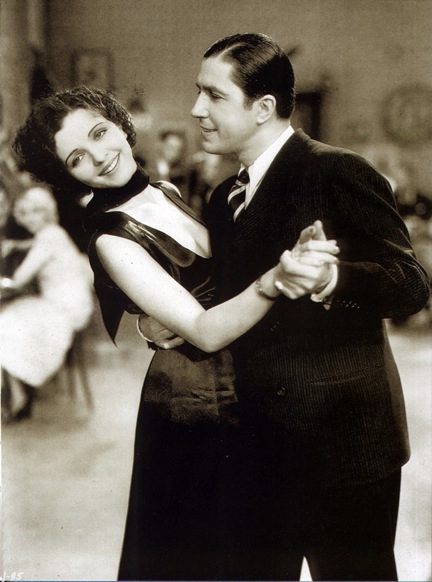
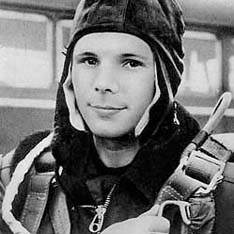 50 years ago, on April 12, Yuri Gagarin on the Space Ship Vostok 1 was the first man to fly into cosmos. We all curried love for space exploration moved by this historical event. It shows that like this poor country establishing an ambitious program and succeeding in it, we can achieve our human goals, if all people would work together for the common good.
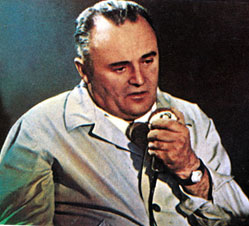 whose charisma and political will moved the whole Russian space program toward the pioneer flights to other planets, and therefore indirectly advancing the space programs in the rest of this world.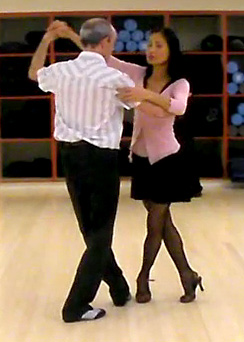
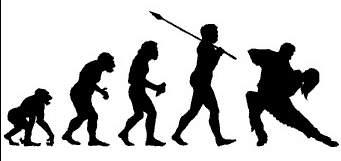
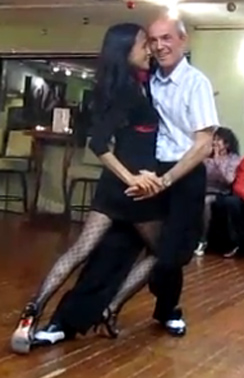
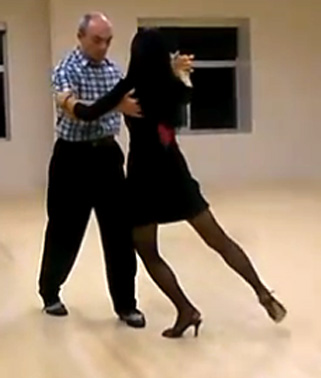
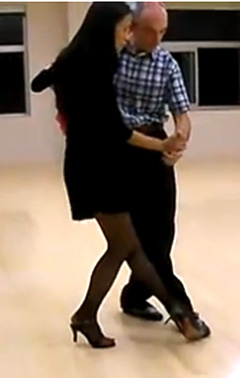
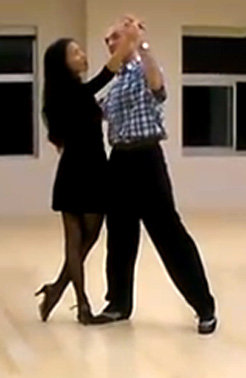
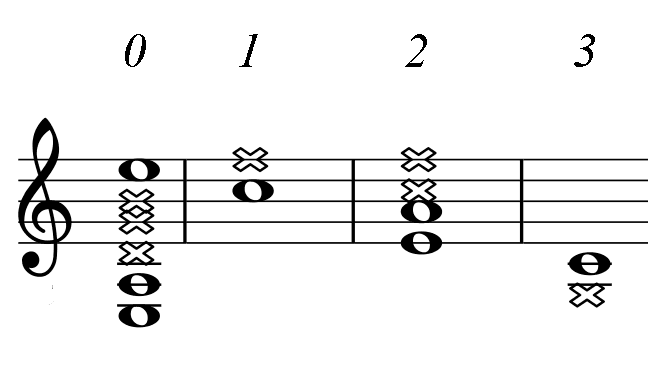 - An easy way from chords to notes.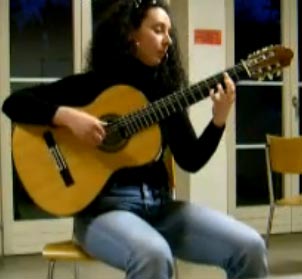
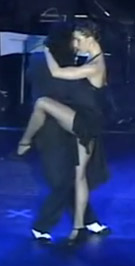


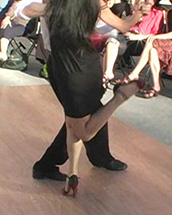
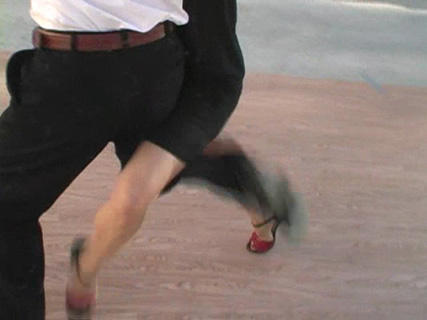
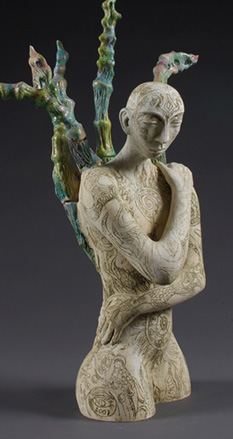 A message from